6 min read
Freelance and Trades: How to Niche Down When You Already Have a Skill
You don’t need a new skill. You need a who. Same craft, tighter buyer — whether you plumb, design, or do SEO.
In this post
You already know how to do the work.
That is not the missing piece. The missing piece is who you do it for.
Most freelancers and tradespeople try to niche by adding a skill. A plumber studies solar. A designer learns motion. An SEO person adds “AI” to the homepage. The calendar gets more confusing. The buyer stays “anyone who needs the craft.”
You do not need a new skill. You need a who.
A market is the whole trade: plumbing, design, SEO. A niche is a buyer plus a job you can say in one sentence. Same hands. Tighter list.
The skill is the craft. The niche is the buyer.
Why finding your niche is so important is the “why.” This post is the “you already work for a living” version — the same reader as the About page.
Write this down:
I help [who] do [job] so they can [outcome].
If “who” is “homeowners,” “brands,” or “small businesses,” you are still in the market. The niche statement template exists so you can finish the sentence before you change your about page.
Then score that sentence — not the trade. Scoring is free.
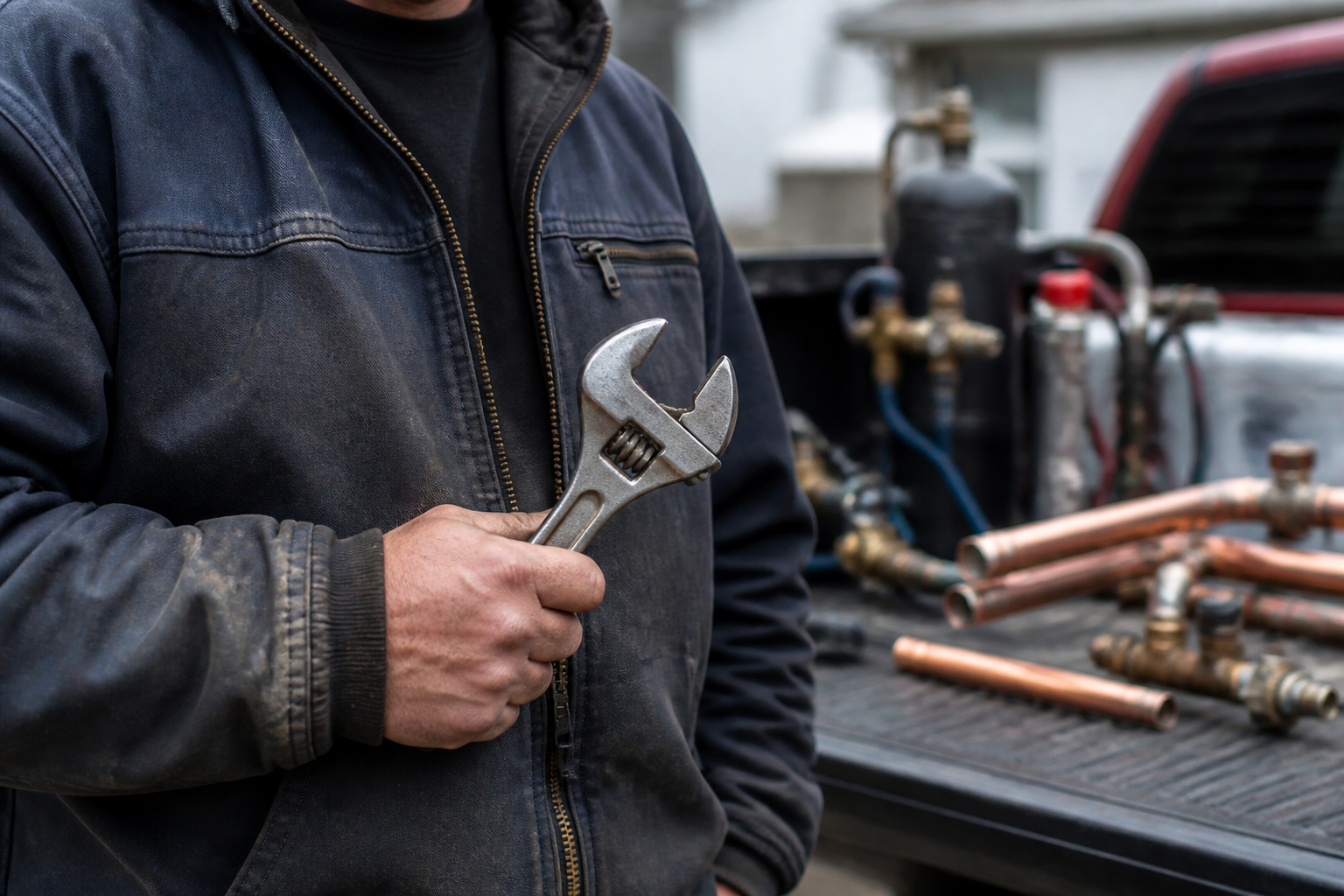
Plumber: same wrenches, one kind of call
The market is plumbing. Every leak, every new build, every water heater, every person who Googled “plumber near me.”
That is a living. It is also a crowded board. You sound like every van on the street.
A niche keeps the license and names the job:
- Aging-in-place remodels for older homeowners who want to stay in the house — grab bars, walk-in showers, fixtures they can actually use.
- New-construction rough-in for a handful of local builders who already hate chasing three different subs.
- Restaurant and café service for independent kitchens that cannot close on a Saturday.
See the difference? You still solder pipe. The buyer can picture themselves. The first conversation is specific: the bathroom they are afraid to redo, the framing date, the Friday night drain.
If you take a one-off outside that niche, fine. Your homepage does not have to advertise every possible call. The beachhead is what you are known for.
A weak version is “eco-friendly plumbing for everyone.” That is still the market, plus an adjective. Score it if you want. Do not be surprised if the read says the who is mushy.
Designer: same Figma file, one kind of client
The market is design. Logos, decks, sites, social templates, a cousin’s menu.
That is a portfolio. It is not a niche.
A niche keeps the eye and names the buyer:
- Menu and storefront design for independent restaurants that just signed a lease and need to open looking finished.
- Landing pages for local home-service companies whose current site is a phone number on a stock photo.
- Pitch decks for first-time franchise owners who have to present to a lender next month.
Same craft. Different job. The restaurant owner is not shopping “a designer.” They are trying to open. The roofer is not shopping “brand.” They are trying to get the phone to ring. The franchise owner has a date.
If your site still says you do branding, web, and print for businesses of all sizes, you have restated the industry. Clients will price you against every generalist in the city.
The weak version is “AI-powered design for startups.” Tool plus a crowd. Who? Which job this month? What do they already pay a human for?
SEO: same search console, one kind of company
The market is SEO. Rankings, content, “we help businesses grow.”
A niche is local SEO for home-service businesses. Tighter still: local SEO for roofers who want calls from Google, not from another flyer.
You already know the work — profiles, pages, reviews, the unglamorous fixes. The niche is not a new algorithm. It is a buyer you can find on a map and call this week.
That is the same pattern as the plumber and the designer. Craft stays. Who narrows.
A weak version is “SEO for anyone who wants traffic.” Traffic is not a job. A booked-up calendar is a job. Score the second one.
How to pick the who you already know
You do not invent a buyer from a trend chart. You look at the work you have already done.
Ask:
- Who have I already helped where the job was obvious?
- Who already has a budget for this — a line item, not a wish?
- Who can I name twenty of by Friday?
Past jobs, suppliers, the last three people who asked you an informal question — that is a better list than a persona.
If you cannot name twenty, the who is still fuzzy, or you are hiding in research. Tighten the buyer or admit you do not know that world yet.
Then write the sentence again. If two sentences share a skill but not a who — plumber for new construction vs plumber for aging-in-place — pick the who you can reach. One beachhead first.
What to do with the sentence
Do not rebuild the website yet.
Score the buyer you already know how to help. The free read will tell you whether demand, willingness to pay, and founder fit line up — or whether you picked a who that looks specific and still will not pay.
If the score is weak, change the who, not the craft. You already have the skill. The skill is not the problem.
If the score holds up, your next questions are who exactly, what to charge, and what to say in the first note. That is the Business Plan Assessment — $29 once, no subscription. Pricing is that simple. The outline of first outreach lives in how to get your first paying customer. The assessment is the filled-in version for your buyer.
If you want the “why niche at all” reminder first, the live post is still why finding your niche is so important. Then come back and name a who.
The St. Louis Fed’s FRED series Employment Level - All Industries Self-Employed, Unincorporated — BLS household-survey data — stood at 9,735 (thousands of persons, seasonally adjusted) in July 2026. That is millions of people already working for themselves without an incorporated payroll. The missing piece for most of them is not a new trade. It is a who.
Final Thought
The trade is the market. The niche is the person who already has the job.
You do not need another certification to start. You need a sentence a stranger would recognize as theirs.
Score the buyer you already know how to help. Leave “I do a little bit of everything” on the old van.